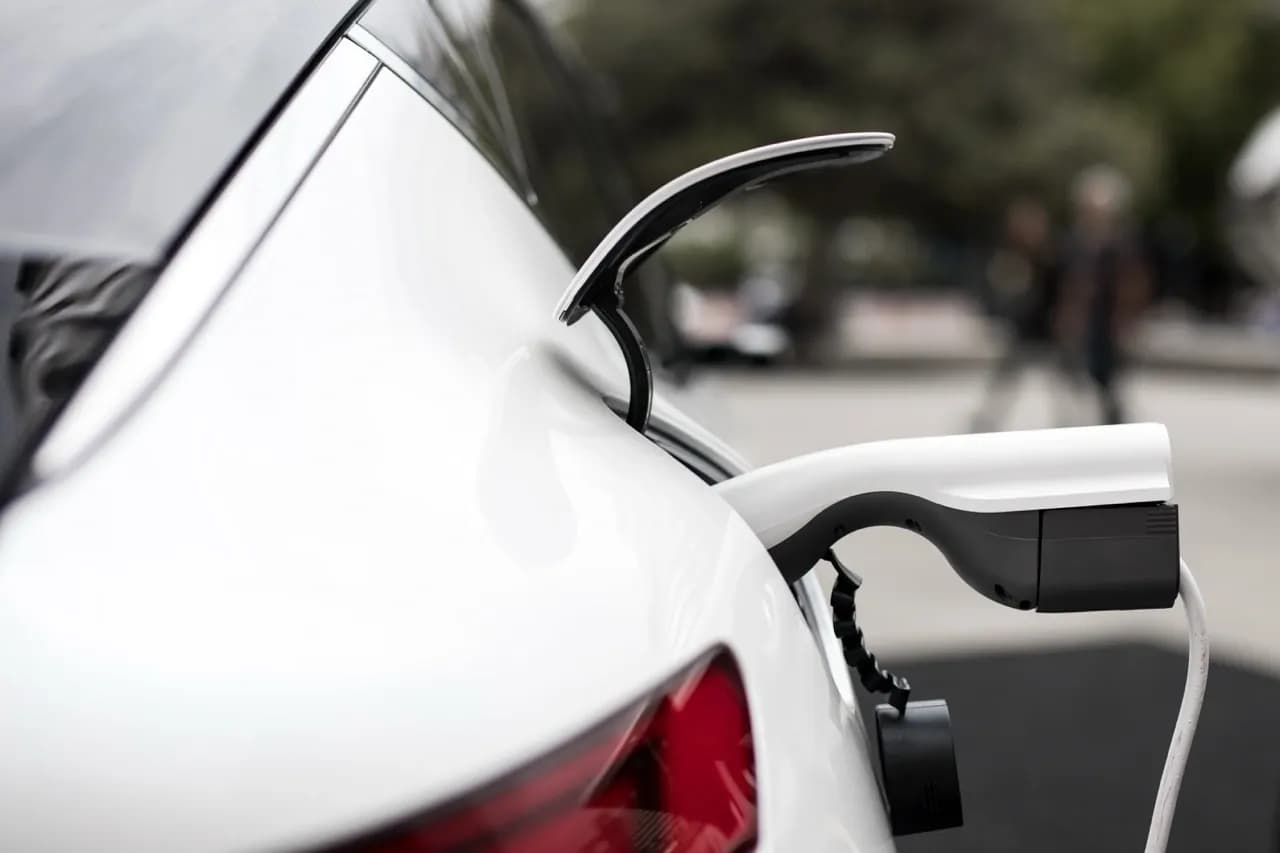
As the number of electric vehicles in Türkiye continues to grow, the country's charging infrastructure is also expanding rapidly. According to September 2026 data published by the Energy Market Regulatory Authority (EPDK), Türkiye has 48,971 charging connectors available through commercial charging services. Of these, 21,307 are DC fast-charging connectors, while 27,664 are AC charging connectors. This development is making both urban and intercity travel by electric vehicle increasingly convenient.
However, renting an electric vehicle raises several new questions for drivers who are accustomed to renting petrol or diesel cars. How far can an electric vehicle travel on a single charge? How many minutes does charging take? Is renting an electric car genuinely more economical? For those planning to drive an electric vehicle for the first time, understanding the answers to these questions in advance can help reduce the likelihood of unexpected situations during their journey.
If you are considering different vehicle options for your trip or daily transportation needs, you can explore QCAR Mobilite's vehicle fleet and compare rental options that suit your rental period and budget.
What Is Electric Vehicle Rental and Who Is It Suitable For?
Electric vehicle rental refers to renting a fully electric car for daily, weekly, monthly, or longer periods. The standard procedures associated with conventional car rental, including reservations, rental agreements, security deposits, and vehicle handover, also apply to electric vehicle rentals. The main difference is that the vehicle is powered by electricity through battery charging, which requires certain adjustments to driving and usage habits.
Renting an electric car can be an attractive option, particularly for drivers with predictable daily routes, those seeking a comfortable urban driving experience, and those who have convenient access to charging stations during their journeys. Individuals considering purchasing an electric vehicle may also choose to rent different models before making a substantial financial investment. For intercity travel, however, planning becomes even more important. Before embarking on a long-distance journey, drivers should evaluate where they will stop to charge, the vehicle's driving range, and its fast-charging capabilities.
What Are the Advantages of Renting an Electric Vehicle?
One of the main advantages of electric vehicles is their energy efficiency. Electric motors can convert a high proportion of the energy they consume into motion. This characteristic can help reduce energy costs, particularly in urban driving conditions. However, the actual savings depend on the vehicle's energy consumption and the tariff applied by the charging station.
Driving comfort is another significant advantage. Electric vehicles produce very little engine noise or vibration. Thanks to the instant torque generated by electric motors, these vehicles respond quickly to acceleration inputs. Driving without conventional gear changes provides additional comfort, particularly in cities with heavy traffic, such as Istanbul, Ankara, and Izmir.
Another advantage is their relatively limited maintenance requirements. Fully electric vehicles do not require engine oil changes, exhaust system maintenance, or conventional transmission servicing. Nevertheless, tyres, brakes, suspension components, and other safety systems still require regular maintenance. Under a rental arrangement, responsibility for these procedures and the scope of maintenance services are determined by the rental agreement. For corporate users, electric vehicles may also be considered as a means of managing energy expenses, meeting employees' transportation needs, and supporting corporate sustainability objectives.
What Is the Driving Range of an Electric Vehicle and How Is It Calculated?
Driving range is one of the most important factors to consider when renting an electric vehicle. The distance a vehicle can travel on a single charge directly influences both vehicle selection and journey planning.
How Many Kilometres Can an Electric Vehicle Travel on a Single Charge?
An electric vehicle's driving range varies depending on its battery capacity and energy consumption. Today, electric cars across different vehicle segments offer official driving ranges starting at approximately 250 kilometres and extending beyond 600 kilometres. However, these figures can vary considerably between models.
The WLTP range frequently listed in vehicle specifications is determined under standardised testing conditions. Although it makes comparing different vehicles easier, it does not mean every driver will achieve the same range under real-world driving conditions. For example, a vehicle with an official range of 450 kilometres may approach this figure during gentle urban driving but cover a shorter distance when travelling at higher motorway speeds.
Why Does Real-World Driving Range Differ from the Advertised Range?
Several factors affect an electric vehicle's energy consumption. Driving speed is among the most significant. As speed increases, particularly on motorways, aerodynamic resistance rises and the vehicle consumes more energy. Ambient temperature is another important factor. During winter, low temperatures can affect battery performance, while cabin heating also consumes energy, potentially reducing driving range. Heavy air-conditioning use during summer can likewise increase energy consumption. In addition, steep gradients, passenger and luggage weight, tyre pressure, and sudden acceleration all influence driving range. Therefore, when choosing a rental electric vehicle, relying solely on the manufacturer's advertised range is insufficient. The characteristics of the planned route, the season, and the availability of charging facilities should all be considered together.
How Far Can You Drive with the Remaining Battery Percentage?
You can estimate an electric vehicle's driving range using its battery capacity and energy consumption figures. For example, consider a vehicle with a usable battery capacity of 60 kWh and an average energy consumption of 18 kWh per 100 kilometres. With a fully charged battery, the theoretical driving range is calculated as follows: 60 ÷ 18 × 100 = approximately 333 kilometres.
However, allowing the battery to become completely depleted during a long journey is not advisable. Suppose you collect the same vehicle with an 80% battery charge and wish to maintain a minimum battery reserve of 10%. In this case, the usable energy available for your journey would be 42 kWh. The calculation would therefore be: 42 ÷ 18 × 100 = approximately 233 kilometres.
This calculation provides a useful starting point for range planning. Since actual energy consumption varies according to road conditions, you should monitor the estimated driving range displayed on the vehicle's dashboard and its current energy consumption throughout your journey.
How Do You Charge a Rental Electric Vehicle?
One of the most common questions among first-time electric vehicle renters concerns the charging process. Essentially, you need to locate a suitable charging station, use a connector compatible with the vehicle's charging port, and follow the station's instructions. However, not all electric vehicles charge at the same speed. It is therefore important to understand the type of charging unit and your rental vehicle's technical specifications.
What Is the Difference Between AC and DC Charging?
Electric vehicles use two main charging methods. AC charging uses alternating current and generally provides lower charging power. The vehicle's onboard charger converts the electricity into a form suitable for storage in the battery. AC charging is commonly available at shopping centres, car parks, residential properties, and hotels. If you plan to park your vehicle for several hours, AC charging may be a suitable option.
DC fast charging uses direct current and can deliver energy to compatible vehicle batteries at higher power levels. It is particularly advantageous during short stops on intercity journeys. However, charging time is limited by the power the vehicle can accept and the battery's conditions at the time of charging.
How Can You Check Charging Connector and Cable Compatibility?
Many electric vehicles sold in Türkiye and Europe commonly use Type 2 connectors for AC charging and CCS2 connectors for DC fast charging. However, vehicles with different charging standards may also be available. You should confirm which connections your rental vehicle supports when collecting it.
At AC charging stations, you may need to use your own charging cable, whereas DC fast-charging stations generally have cables permanently attached to the charging unit. Before setting off on a long-distance journey in a rental electric vehicle, make sure all required charging cables have been provided and are free from visible damage.
How Do You Pay at an Electric Vehicle Charging Station?
Payment procedures at charging networks in Türkiye may vary depending on the charging network operator. Many operators allow users to register, add a payment method, and initiate charging sessions through a mobile application. Some stations also offer alternatives such as QR code payments, bank cards, or contactless payments.
The charging process generally follows this sequence: First, select a suitable charging station and connector. Next, initiate the charging session using the operator's application or an accepted payment method. Connect the charging cable to the vehicle and confirm that charging has started. Once charging is complete, end the session through the application or charging station and safely disconnect the cable.
For publicly accessible charging services, energy prices are calculated per kWh. Under EPDK regulations, charging service providers cannot charge an additional connection or session initiation fee. However, published conditions concerning reservation fees and overstay charges may apply. It is therefore advisable to check the applicable tariff before starting a charging session.
How Can You Find Electric Vehicle Charging Stations in Türkiye?
You can use the Şarj@TR mobile application developed by EPDK to locate charging stations throughout Türkiye. The application allows you to view charging station locations, connector types, charging power, payment methods, prices, and reported availability. This information can help you select a charging unit compatible with your vehicle and plan your journey.
You can also use the applications provided by charging network operators such as Trugo, ZES, Eşarj, and other providers. Some electric vehicles feature navigation systems that automatically display charging stations along the planned route. However, when preparing for a long-distance journey, identifying alternative charging locations rather than relying on a single station can help you manage unexpected disruptions.
How Long Does It Take to Charge an Electric Vehicle?
Electric vehicle charging time depends not only on battery capacity but also on the charging station's power output and the vehicle's charging technology. For example, charging a vehicle with a usable battery capacity of 60 kWh from 20% to 80% requires approximately 36 kWh of energy to be added to the battery.
Assuming continuous charging at 50 kW, the theoretical minimum time required would be approximately 43 minutes. At a constant charging power of 150 kW, the same amount of energy could theoretically be transferred in approximately 14 minutes.
However, actual charging times are generally longer than these simplified calculations suggest. This is because the power a vehicle can accept does not remain constant, and charging speed may decrease as the battery's state of charge increases. Therefore, a charging station rated at 150 kW or 250 kW cannot charge every electric vehicle at the same speed. If a vehicle supports a maximum DC charging power of 80 kW, it cannot exceed this technical limit even when connected to a more powerful charging station.
Why Is Charging from 20% to 80% Important for Electric Vehicles?
In many electric vehicles, DC fast charging delivers higher performance at low and medium battery charge levels. As the battery approaches an 80% state of charge, charging power generally begins to decrease. For this reason, on some long-distance journeys, charging to approximately 80% and continuing the journey instead of waiting for the battery to reach 100% may reduce overall travel time.
However, this is not a universal rule. The distance to the next charging station, weather conditions, road gradients, and the vehicle manufacturer's recommendations should all be considered. In addition, daily charging recommendations may vary depending on the battery chemistry.
How Is the Cost of Renting an Electric Vehicle Calculated?
Electric vehicle rental rates vary according to the vehicle's make, model, category, rental duration, and pick-up location. Holiday periods, booking dates, mileage allowances, and insurance options can also affect the total rental cost. When evaluating whether renting an electric car is economical, charging expenses should be considered alongside the daily rental rate.
How Much Does It Cost to Drive an Electric Vehicle for 100 Kilometres?
Electric vehicle energy consumption is generally expressed in kWh/100 km. This figure indicates how much electricity the vehicle consumes to travel 100 kilometres. Calculating charging costs requires two pieces of information: the vehicle's electricity consumption per 100 kilometres and the charging station's price per kWh.
For example, consider an electric car consuming 18 kWh per 100 kilometres. At a charging tariff of TRY 8/kWh, the approximate energy cost for 100 kilometres would be TRY 144. At TRY 10/kWh, the cost would increase to TRY 180. Please note that these figures are illustrative examples and do not represent current charging network operator tariffs.
Energy losses may occur between the electricity drawn from the grid and the energy actually stored in the battery. Consequently, the amount paid may differ from estimates based solely on the consumption displayed on the vehicle's dashboard.
Is an Electric Vehicle More Economical Than a Petrol Car?
The most effective way to determine whether renting an electric vehicle makes financial sense is to compare the cost of travelling the same distance in two different vehicles. Assume an electric vehicle consumes 18 kWh per 100 kilometres and the charging tariff is TRY 10/kWh. In this case, the approximate energy cost would be TRY 180.
For comparison, consider a petrol-powered vehicle consuming 7 litres per 100 kilometres, with a hypothetical petrol price of TRY 55 per litre. The fuel cost for travelling 100 kilometres would be TRY 385. In this example, the electric vehicle provides an energy cost saving of TRY 205 per 100 kilometres.
However, if the electric vehicle has a higher daily rental rate, the overall cost advantage may be reduced. For example, suppose the electric car costs an additional TRY 150 per day to rent over a three-day rental period. The total additional rental cost would be TRY 450. To offset this amount, the savings achieved through lower charging costs would need to exceed TRY 450.
Cost Differences Between Home, Hotel, and Fast Charging
Electric vehicles can also be charged at home or at accommodation facilities where suitable equipment and infrastructure are available. Depending on the applicable electricity tariff, the unit cost of home charging may be lower than that of public fast-charging stations.
However, if you intend to charge a rental electric vehicle at home, you must ensure that the electrical installation and charging equipment are safe and suitable. Unsupervised charging using ordinary extension cables should be avoided. You should also check the rental company's requirements and, where applicable, the rules established by the residential property or car park management.
Charging arrangements at hotels may vary. Some properties include charging services in the accommodation rate, while others charge according to the amount of electricity consumed. Particularly during extended stays, these differences can affect the overall cost.
What Should You Consider Before Taking an Electric Vehicle on a Long-Distance Journey?
Planning your driving range and charging stops in advance is essential when travelling long distances in an electric vehicle. Before departure, familiarise yourself with the vehicle's average energy consumption and identify DC fast-charging stations along your route. Combining charging stops with meal and rest breaks can help you save time.
Charging stations may become particularly busy during public holidays and peak travel periods, so identifying alternative charging locations is advisable. Maintaining a battery reserve of approximately 10% to 20% can also provide an additional safety margin in unexpected situations.
Remember that weather conditions can affect driving range. Cold temperatures and cabin heating in winter, as well as intensive air-conditioning use in summer, may increase energy consumption. Maintaining a steady, reasonable speed, avoiding sudden acceleration, and keeping tyre pressure at the recommended level can help preserve driving range.
If you encounter a malfunction at a charging station, contact the charging network operator's customer support service first. If the issue cannot be resolved, check your remaining driving range and proceed to an alternative charging station. If the battery reaches a critically low level, stop in a safe location and contact the rental company's roadside assistance service.
Driving Tips for First-Time Electric Vehicle Users
Electric vehicles differ from conventional cars in certain aspects of the driving experience, particularly their rapid acceleration response and regenerative braking systems. Regenerative braking converts part of the vehicle's kinetic energy into electricity during deceleration and returns it to the battery. As a result, some models slow down noticeably when the driver releases the accelerator pedal.
If you are driving an electric vehicle for the first time, it is advisable to familiarise yourself with its acceleration and braking responses in a safe area with light traffic.
To maximise driving range, avoid sudden acceleration, maintain a steady speed whenever possible, and use the vehicle's Eco driving mode if available. Avoiding excessive speeds, particularly on motorways, can also reduce energy consumption. Additionally, monitoring the instantaneous and average energy consumption figures displayed on the dashboard allows you to adjust your driving habits and potentially travel farther on a single charge.
What Should You Check in an Electric Vehicle Rental Agreement?
In addition to standard rental terms and conditions, electric vehicle rental agreements may contain specific provisions relating to the battery, charging equipment, and vehicle return requirements.
Battery Charge Level and Vehicle Return Conditions
Similar to the fuel policies applied to conventional rental cars, electric vehicle rental agreements may specify battery charge levels at vehicle pick-up and return. For example, if a vehicle is provided with an 80% battery charge, the rental agreement may require it to be returned at a comparable charge level.
If the vehicle is returned with a lower battery charge, energy charges or service fees specified in the rental agreement may apply. Therefore, it is important to record the battery percentage when collecting the vehicle and familiarise yourself with the return conditions in advance.
Security Deposit, Mileage Allowance, and Additional Charges
Electric vehicle rentals may also require a security deposit, depending on the vehicle category and the rental company's policies. This amount is generally held as security against potential damage, traffic fines, and other contractual obligations.
The rental agreement may also include provisions concerning daily mileage allowances, late return fees, one-way rental or different-location return conditions, and additional driver charges. For electric vehicles specifically, you should also check the conditions applicable if a charging cable is lost, damaged, or not returned with the vehicle.
Insurance Coverage and Battery Damage in Electric Vehicles
Accident and damage procedures for electric vehicles generally follow processes similar to those applicable to other rental cars. However, certain repairs may require specialised expertise because of the battery pack and high-voltage electrical systems.
It is therefore important to review the comprehensive motor insurance coverage, applicable excess or deductible amounts, and provisions relating to battery or underbody damage in the rental agreement. In particular, responsibility for incidents such as flooding, severe impacts to the vehicle's underside, or charging system malfunctions depends on the rental agreement and the applicable insurance terms and conditions.
What Should You Check When Collecting a Rental Electric Vehicle?
Carrying out a few simple checks during vehicle collection can make a significant difference to ensuring a smooth rental experience. If you are renting an electric vehicle for the first time, reviewing the following details is particularly advisable.
- Battery charge level: Record the battery percentage and estimated driving range displayed when you collect the vehicle.
- Charging cable: Check that all required charging cables and equipment are present.
- Charging port: Inspect the vehicle's charging port for any visible damage.
- Dashboard: Check for warning messages relating to the battery, motor, or charging system.
- Vehicle bodywork: Photograph any existing scratches, dents, or other damage and ensure they are recorded on the vehicle handover report.
- Charging procedure: Find out which charging connector to use and how to start and stop a charging session.
- Roadside assistance: Save the contact number for assistance in the event of a breakdown or depleted battery.
- Return conditions: Confirm the required battery charge level and the scheduled vehicle return time.
Plan Ahead Before Renting an Electric Vehicle
Electric vehicles offer solutions for a wide range of transportation needs thanks to their energy efficiency, quiet driving experience, and expanding charging infrastructure. However, a successful rental experience requires careful consideration of the vehicle's technical specifications and operating conditions before making a reservation.
First, determine your daily or total travel distance. Next, compare the real-world driving range, charging speed, and available charging facilities along your intended route for the vehicle you are considering. Finally, calculate the daily rental cost together with the estimated energy expenses to identify an option that suits your budget.
If you are looking for the right vehicle for your trip or everyday transportation needs, explore QCAR Mobilite's car rental options, compare vehicles across different categories, and make your reservation.